Wash Ashore / 漂着地
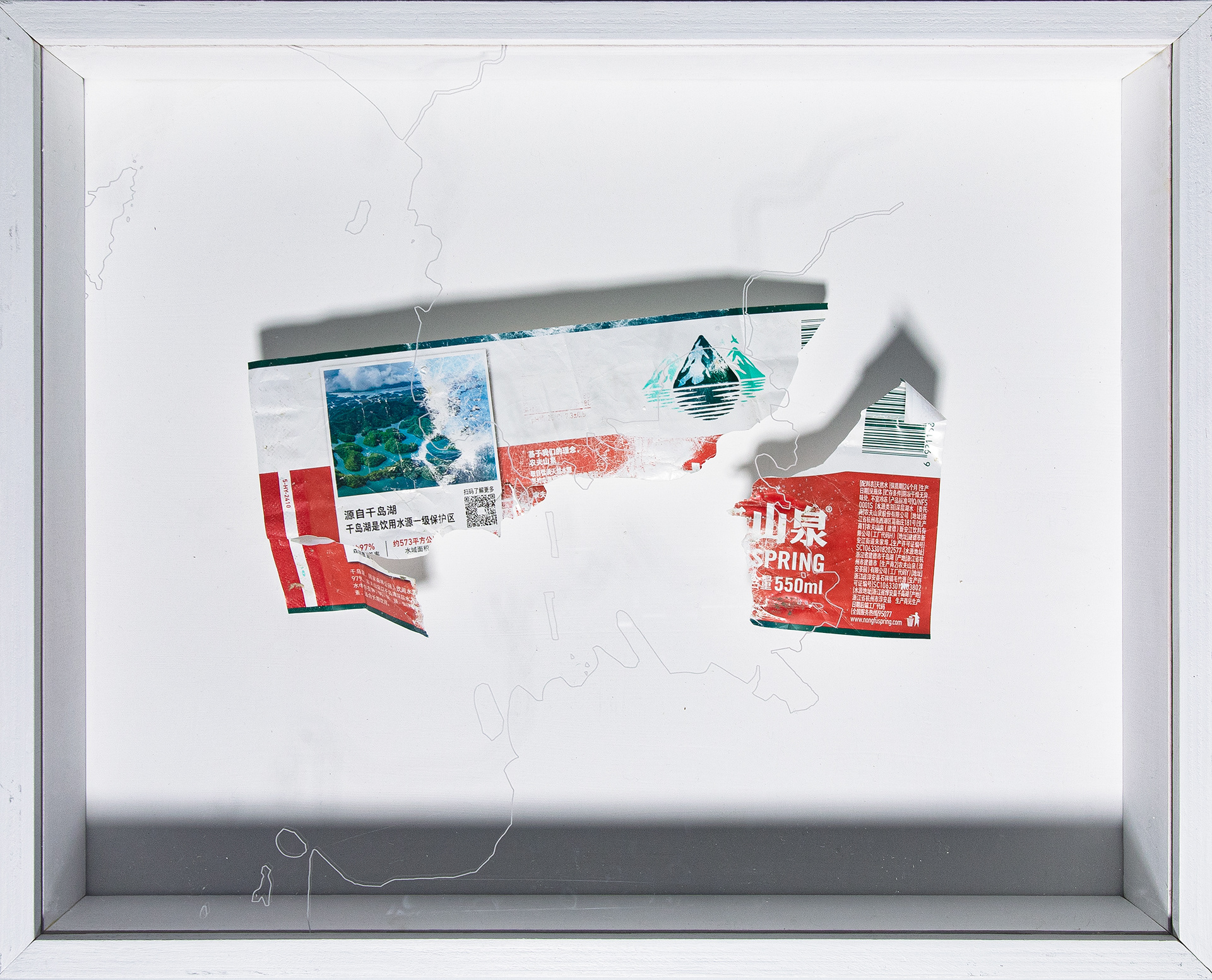
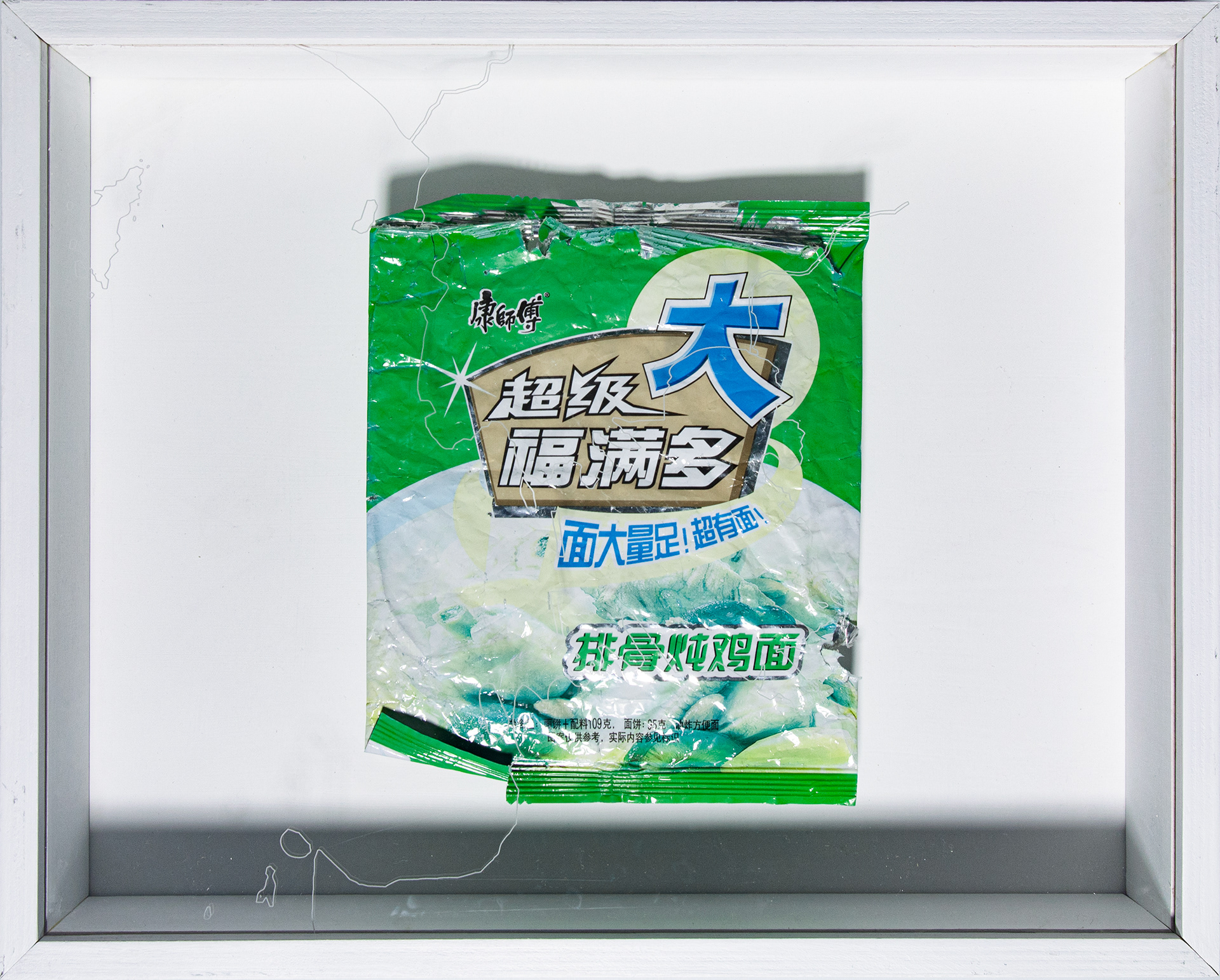
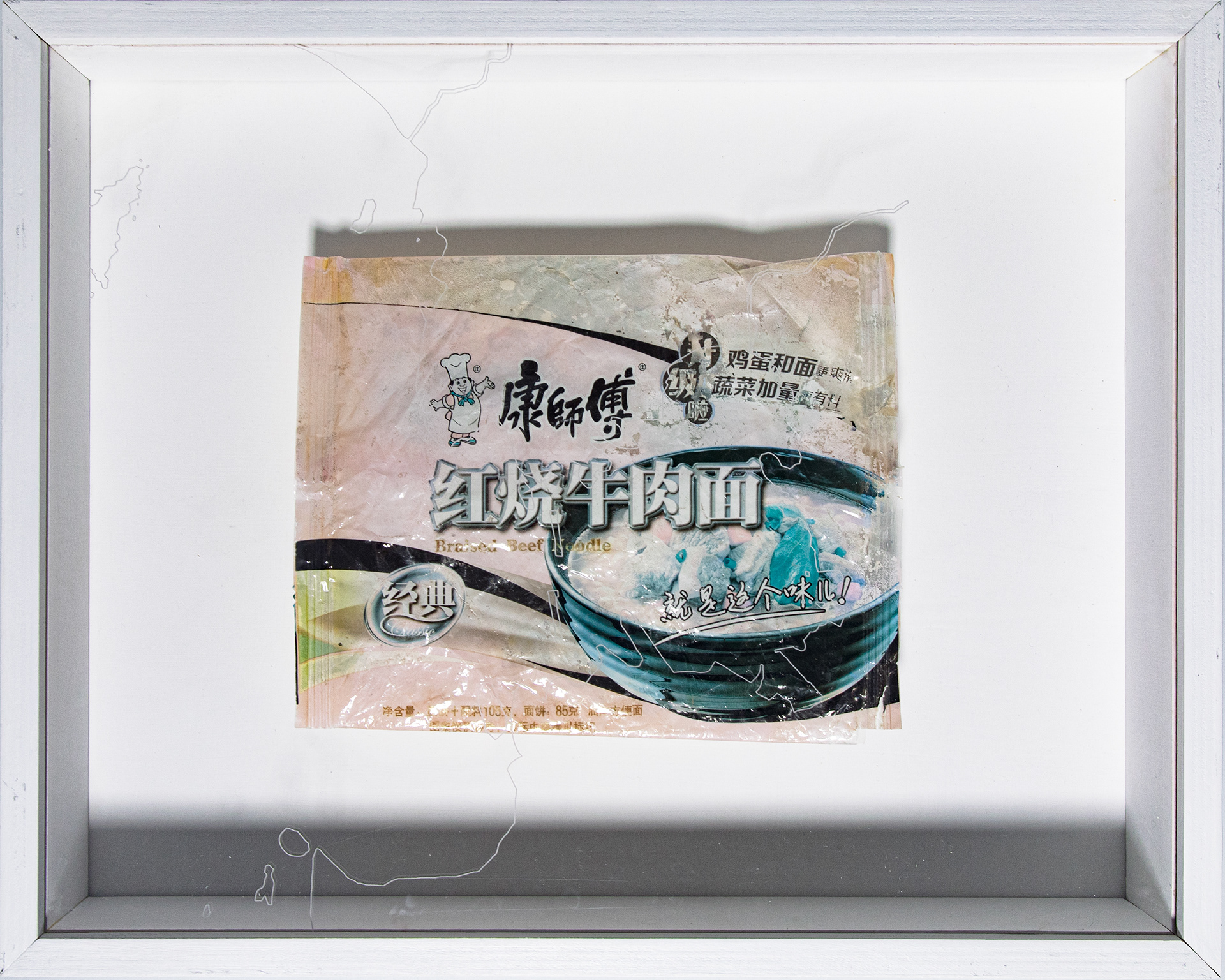
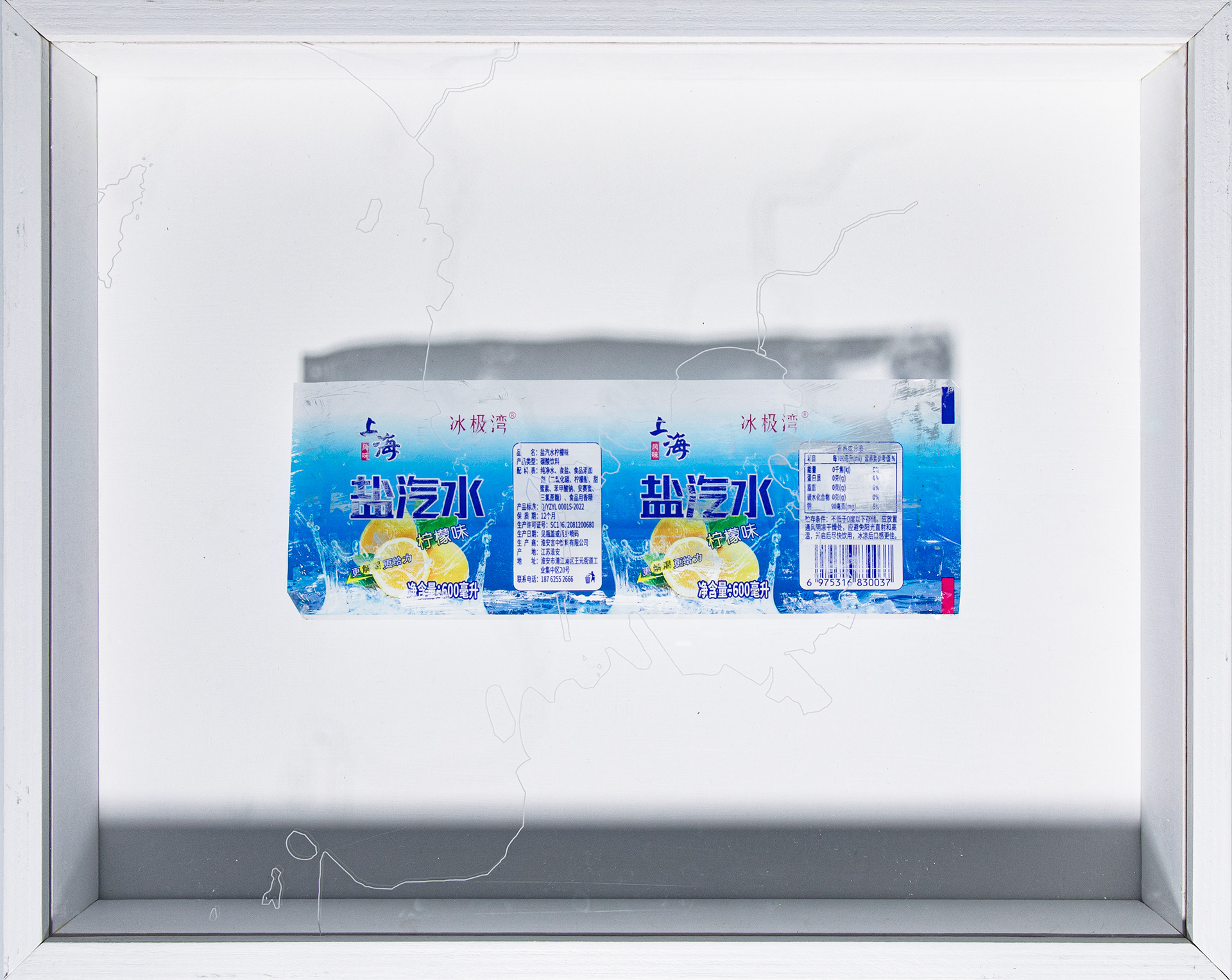
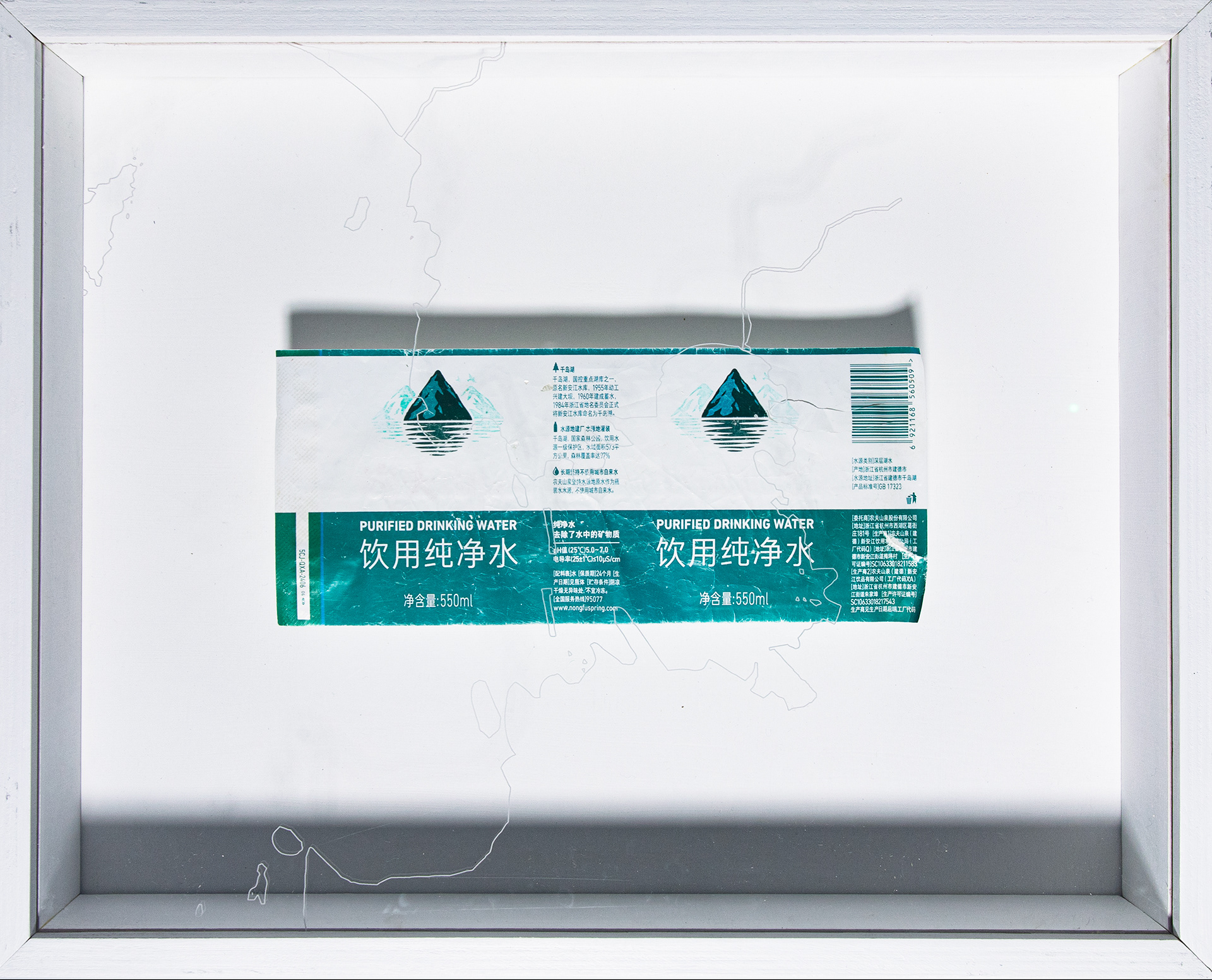
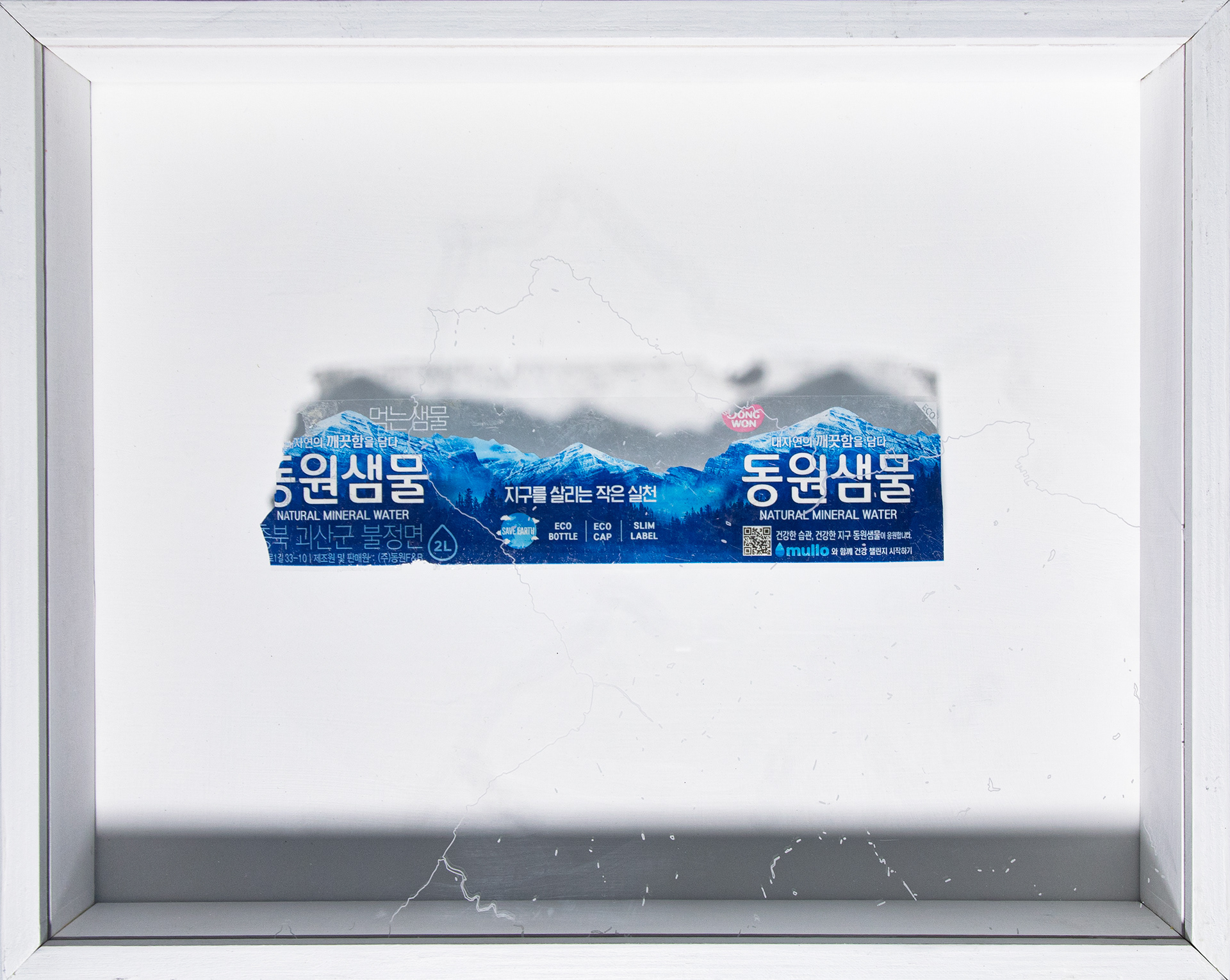
2025, found labels, plywood, acrylic, Dimensions: 303mm x 380mm
I come across many kinds of rubbish while kayaking on the sea. Such as plastic fragments, huge fishing nets, styrene forms and bear cans. The most interesting debris is labels printed in foreign languages. The one I picked up at the Shakotan Peninsula in Hokkaido has Korean characters on it; the others I picked up at Minami-Izu in Shizuoka prefecture have Chinese characters on them.
Debris is moving across the ocean as people move around the globe. Ocean debris is an ideal existence since it does not need to take so many procedures like I do when I go abroad. At the same time, labels printed in foreign languages remind me of those who must live as immigrants. Some of them are displaced by forces beyond their control.
Issues related to consumerism and the movements of people would have a similarity.
カヤックで海を移動しているといろいろな種類のごみに出くわす。漁業に使われていただろうプラスチック片や大きな網、発報スチロールから飲み物の缶まで。その中でも目が惹かれたものは外国語が書かれている食品の袋やペットボトルのラベルだった。北海道の積丹半島の海で漂っていたラベルには韓国語が書かれていて、南伊豆の海で漂っていたラベルには中国語が書かれていた。
人々が移動するように、ごみも海を通じて移動していく。国境さえも容易く越えていくごみは、ある意味で様々な手続きをしなければ外国へと行くことができない人間からすると羨ましい存在である。同時に抗えない自然の力に翻弄されるままに移動していくことは、ある問題が契機として自分たちではどうすることも出来なくなり、移民として生きていくしかない人たちのことを想起させる。
消費主義社会と人々の移動に関する問題は全く異なる問題のように見えていたのだが、もしかしたら似ているのかもしれない。